
Who we are
A non-profit organisation legally established in Tenerife, committed to equine-assisted socio-educational intervention.
Who we are
The Asociación Ecuestre Riendas de Esperanza NA Stablos is a non-profit organisation, legally established and registered in Tenerife (Arona Sur, Canary Islands, Spain). We are founded on the conviction that horses are a first-class therapeutic, educational and social agent, capable of generating profound transformations in people experiencing vulnerability, disability or social exclusion.
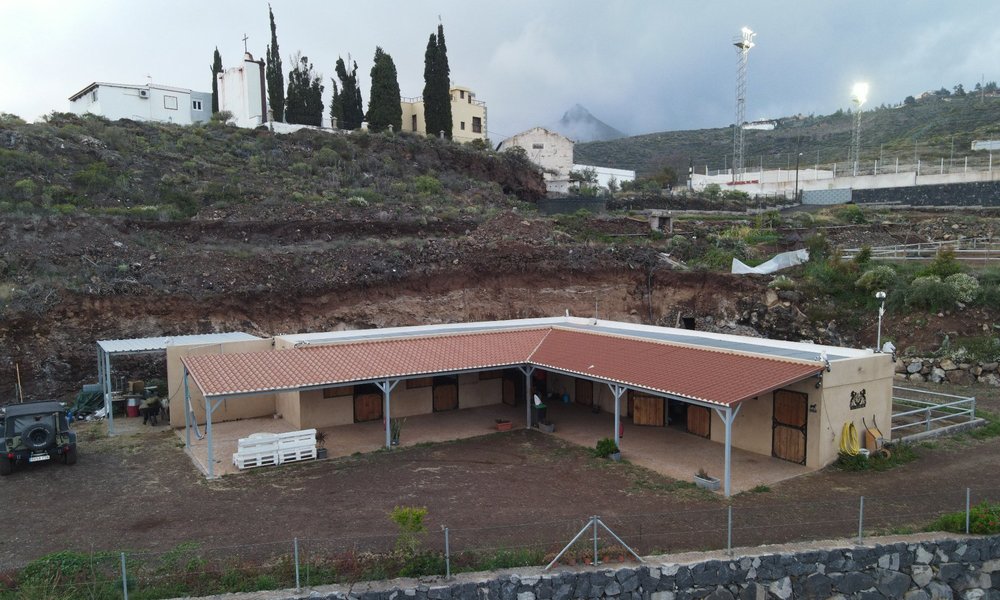
Legally established in 2025 and registered in the Canarian Association Registry, Riendas de Esperanza was created to address a specific need in South Tenerife: the absence of structured equine-assisted intervention programmes accessible to the most vulnerable groups in the Arona area.
For funding bodies: The association has its own Tax ID (CIF), is registered in the Canarian Association Registry, holds a bank account in the entity's name, has registered statutes and active governing bodies. All documentation is available in Transparency.
Mission, Vision & Values
Mission
Our mission is to design, implement and evaluate equine-assisted socio-educational intervention programmes that improve the quality of life, autonomy and social integration of the most vulnerable groups in Tenerife.
Vision
To become an institutional reference in animal-assisted intervention in the Canary Islands, as a model of best practices, transparency and effectiveness in the social sector.
Values
- Professionalism: Interventions designed under rigorous technical criteria, with standardised protocols and continuous evaluation.
- Real inclusion: Effective adaptation to each person, removing economic, physical and social barriers.
- Transparency: Permanent accountability and public documentation accessible to any interested party.
- Respect for the animal: Horse welfare is a non-negotiable condition. We work with specifically selected and trained horses.
- Collaboration: We work in partnership with other organisations, public administrations and social and educational professionals.
- Continuous improvement: Every programme is systematically evaluated and results inform methodological evolution.